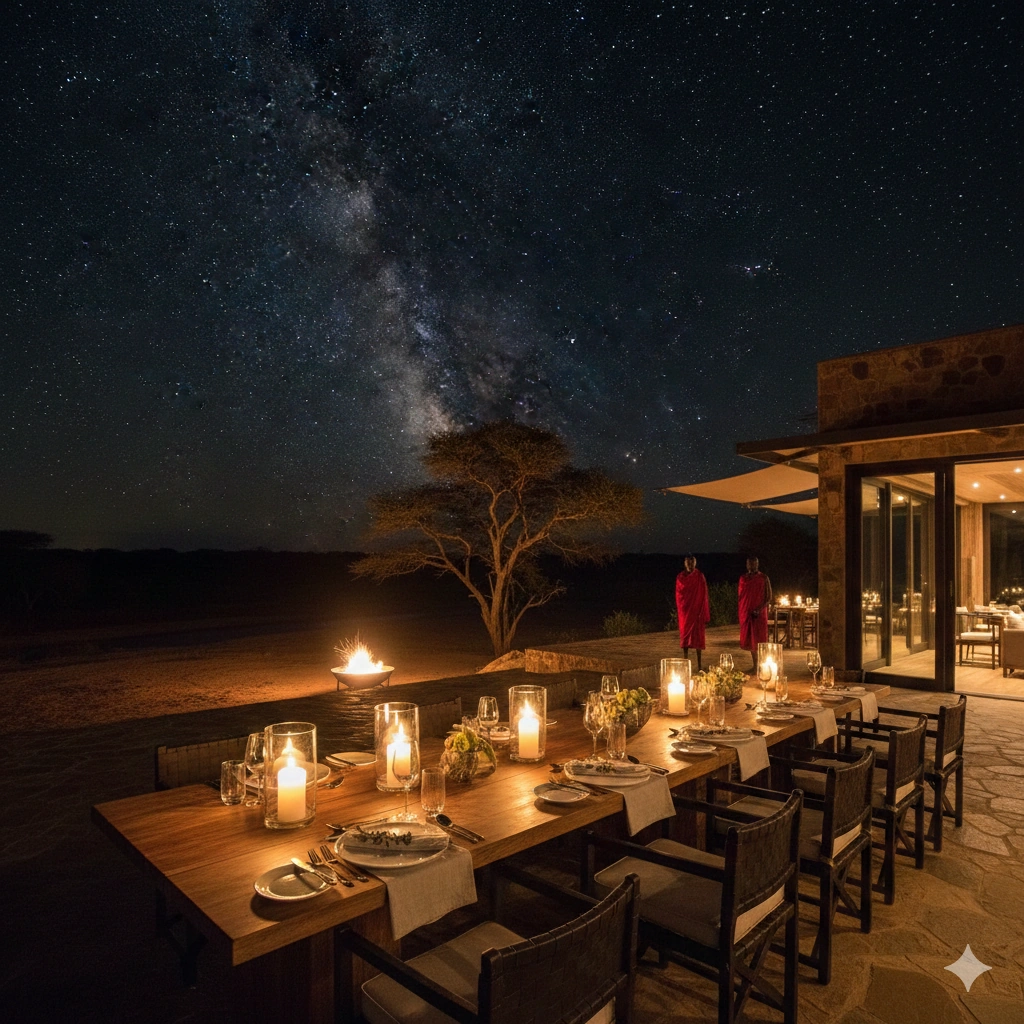
The Table
Dining at the edge of the known world.
Dining at the edge of the known world.
"Not a destination.
A territory.
Protected forever."
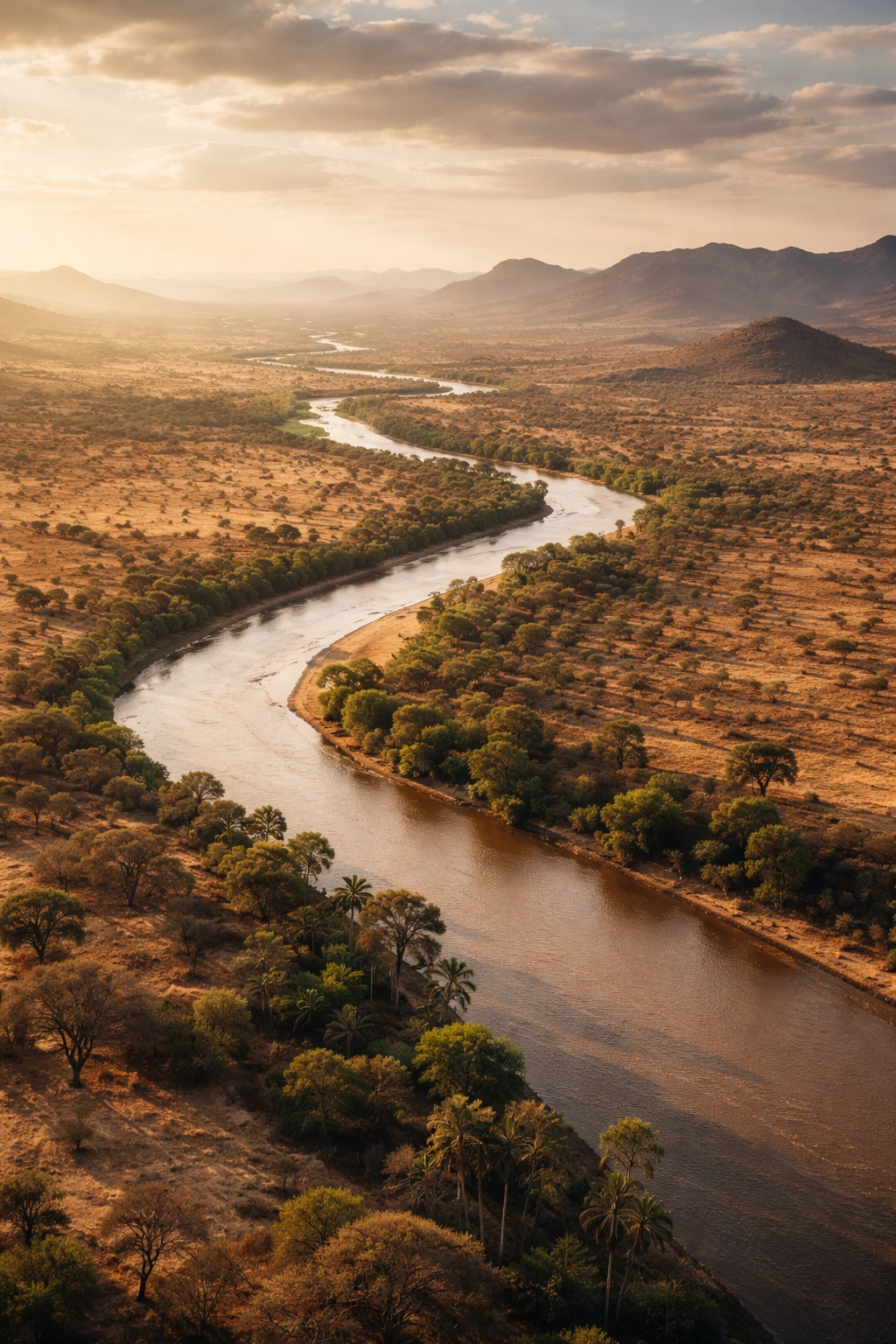
Eisupat occupies a stretch of Kenya's northern frontier where volcanic escarpment meets the bend of the Ewaso Nyiro. The land here is ancient, unhurried, and indifferent to fashion. We have built within it as a guest — with basalt and acacia, following the geometry the earth already provided. No roads lead here by accident. That is precisely the point.
Kenya's northern territory remains among the least-visited, least-photographed, and most ecologically intact wilderness on the continent. Eisupat sits at its centre.
The Ewaso Nyiro runs through the heart of the territory — a permanent river in a land defined by seasonal drought, drawing wildlife from hundreds of kilometres in every direction.
The territory rises from the river basin onto ancient volcanic escarpment — basalt and lava-formed ridgelines that have shaped Samburu movement and wildlife corridors for millennia.
Grevy's zebra, reticulated giraffe, Beisa oryx, Somali ostrich, and gerenuk exist here in numbers found nowhere in southern Kenya. This is their territory, not ours.
The nearest town is hours away by road. No light pollution reaches this basin. The Milky Way is visible from horizon to horizon on every clear night of the year.
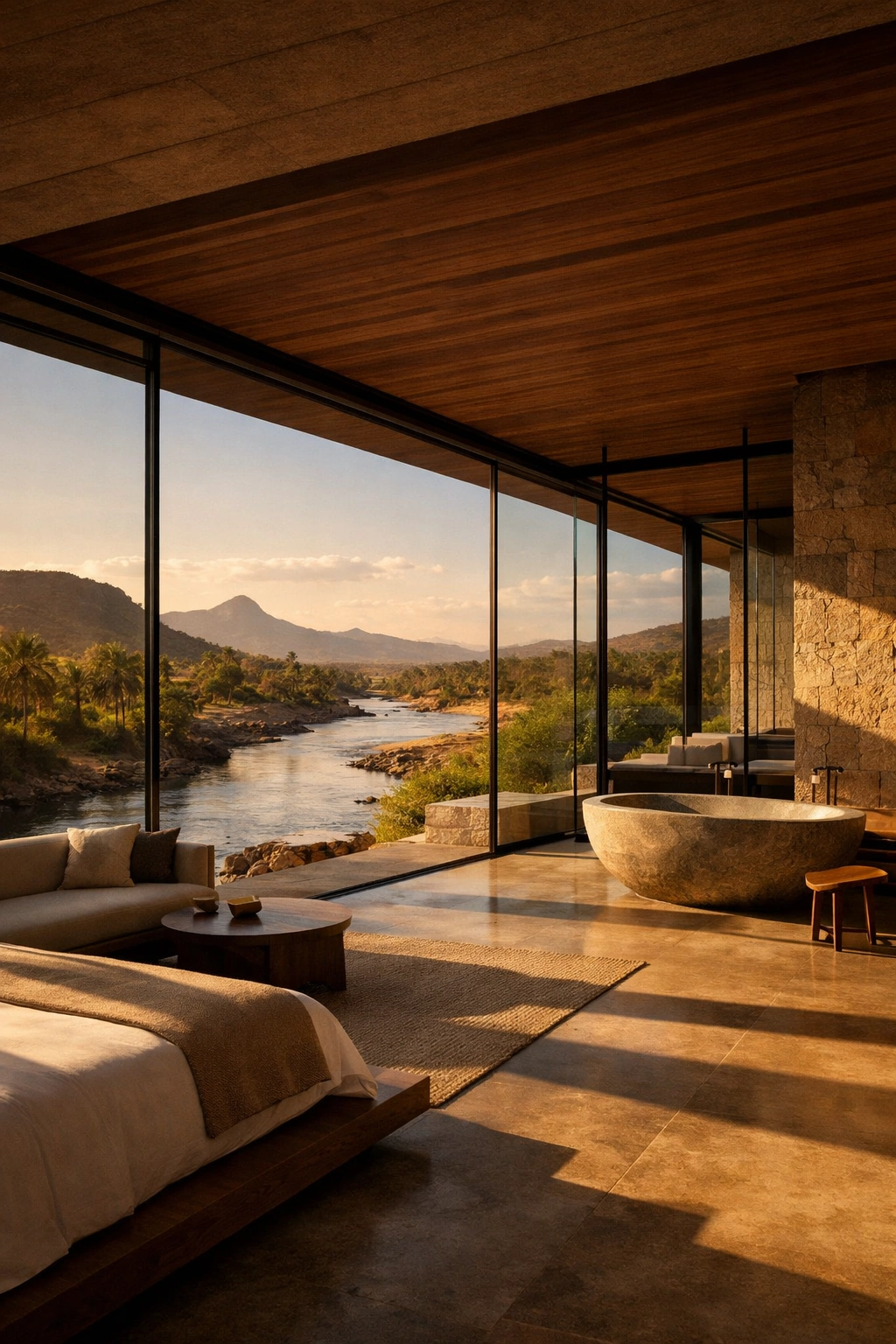
Fourteen villas elevated over the Ewaso Nyiro River. Each one cantilevered above the waterline, open on three sides, oriented toward the crossing points where elephants and buffalo arrive each evening. No walls. Just the wild.
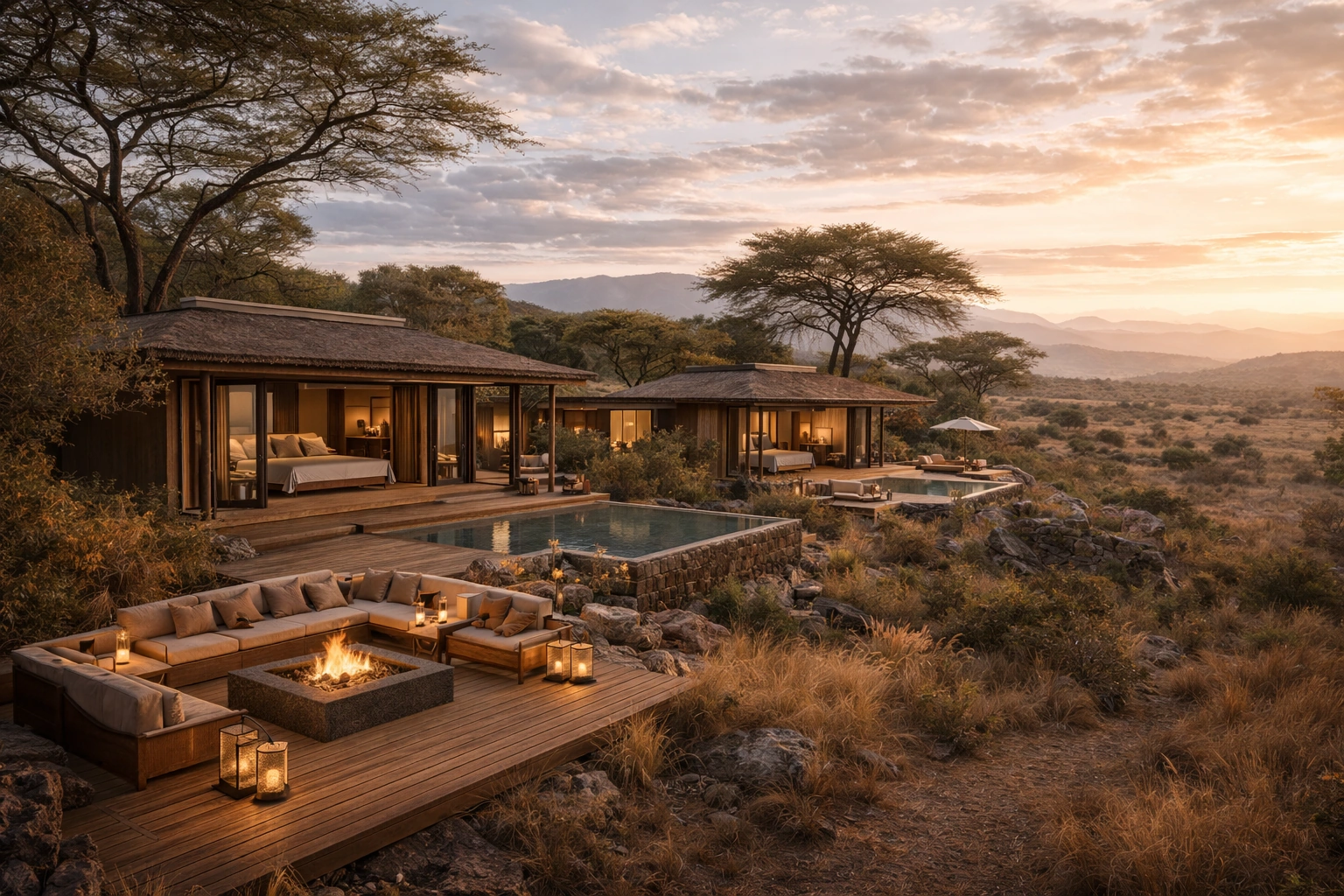
Sixteen villas set into the volcanic escarpment above the valley floor. The views span forty kilometres of unbroken frontier. At night, there is no light between you and the Milky Way. Nothing at all.
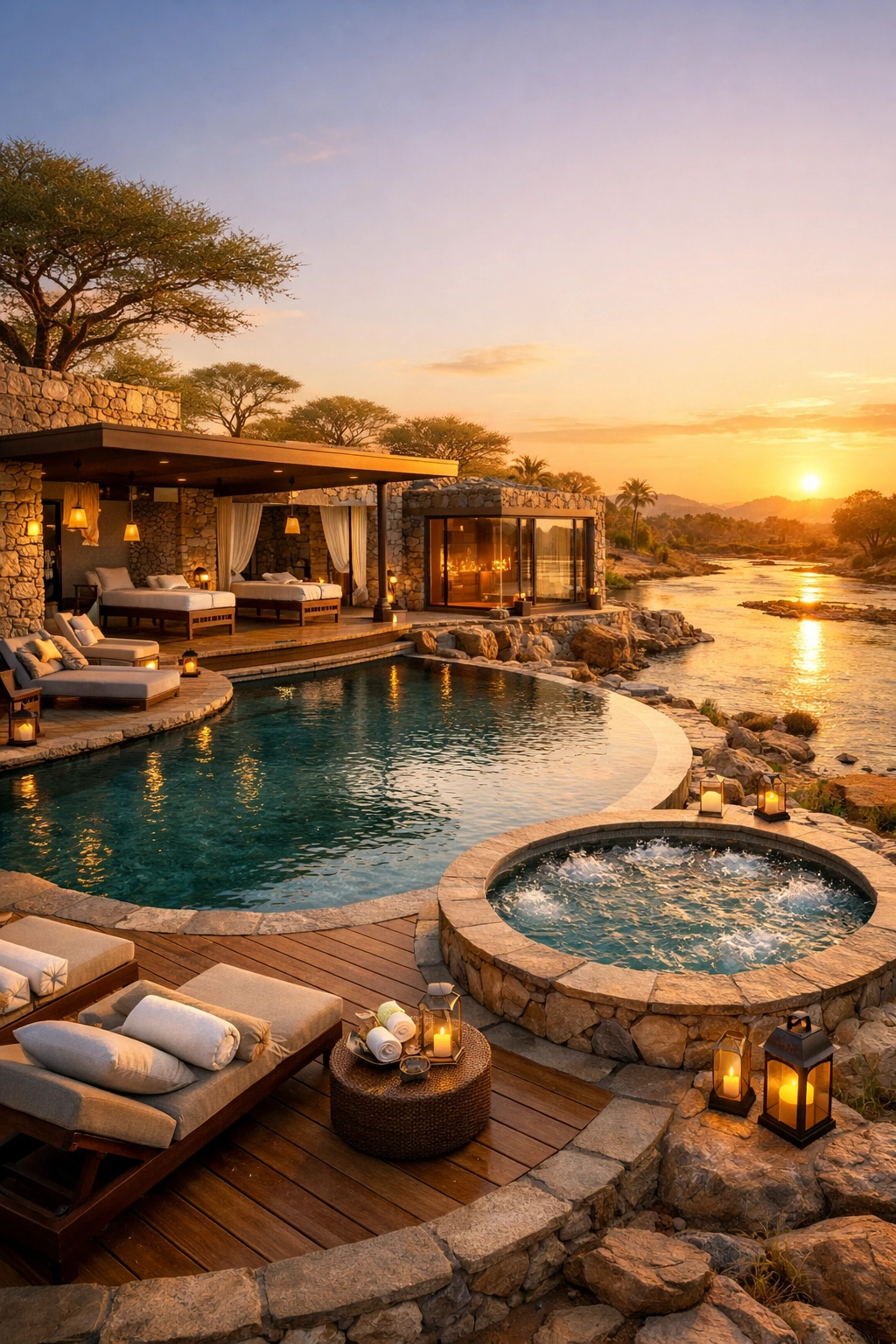
Four treatment suites embedded within an ancient doum-palm grove. Treatments draw from Samburu botanical knowledge — resins, clays, and oils harvested within a kilometre of where you sleep. There is no menu. There is only the land.
Each chronicle is private. No shared departures, no fixed itineraries. The frontier, on your terms, guided by people who have spent their lives here.
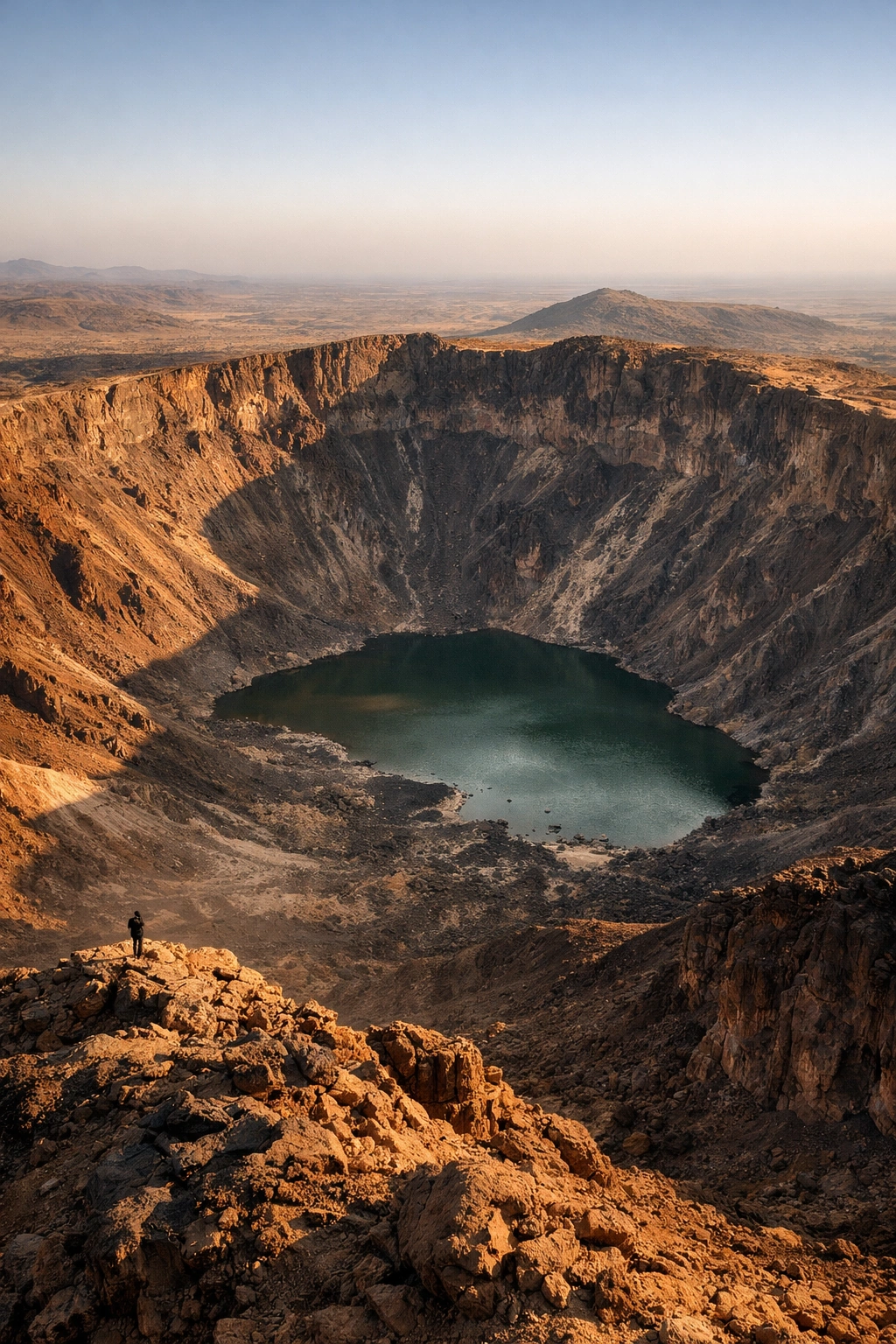
A collapsed volcanic crater, ten thousand years in the forming, now filled with mineral brine. Desert elephants, lesser flamingos, and over three hundred migratory species converge here in season. We access it before dawn, on foot, in complete silence. The place explains itself.
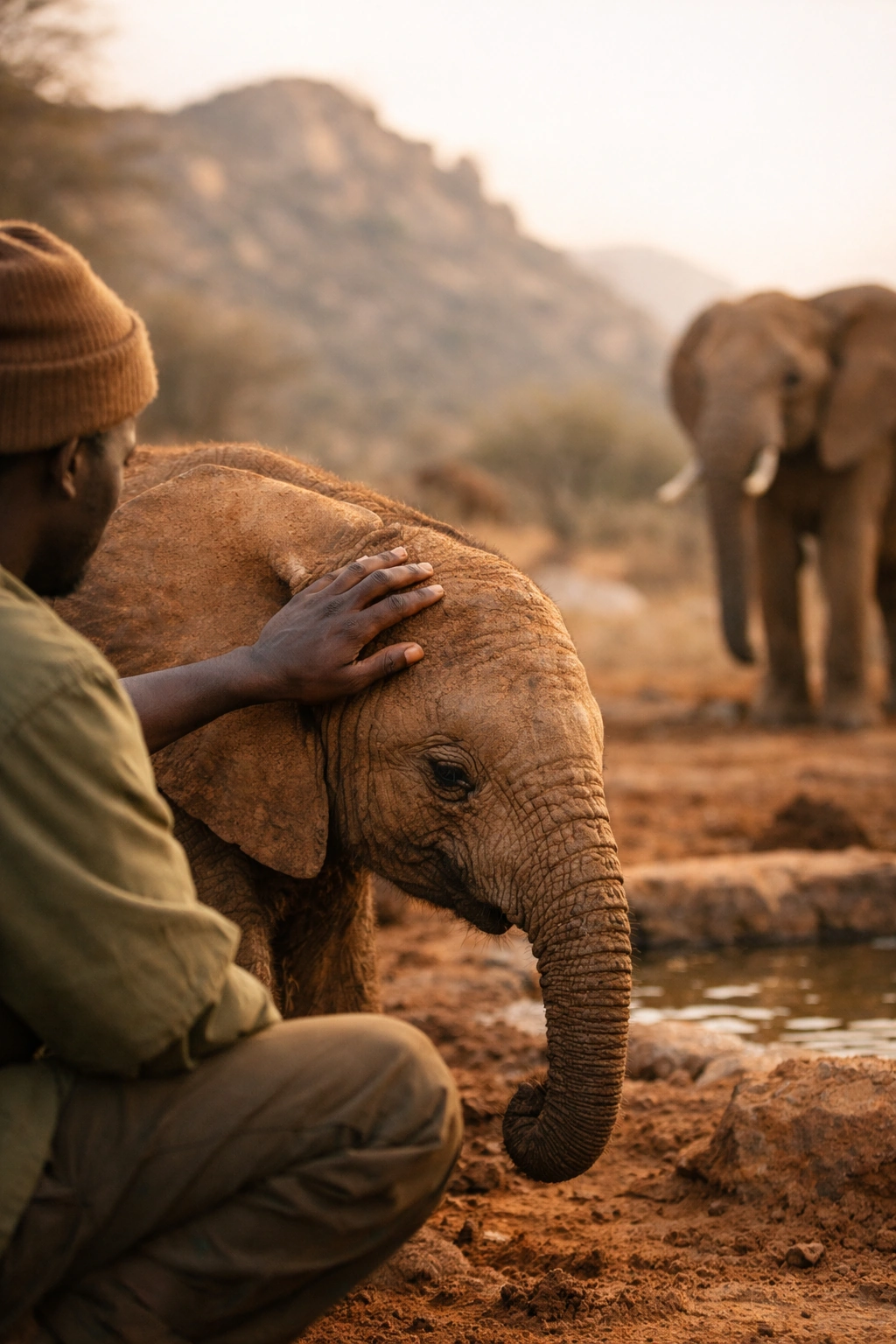
Africa's first community-owned elephant orphanage, run entirely by Samburu women and men. A private morning visit — before any other group arrives — offers unmediated access to one of the most quietly extraordinary places on earth.

Grevy's zebra, reticulated giraffe, Beisa oryx, Somali ostrich, gerenuk. None found in the Masai Mara. All resident here. Dawn and dusk drives with a naturalist who has tracked these animals across this specific territory for decades.
Every structure at Eisupat is conceived as a temporary occupant. We build with materials drawn from the immediate landscape, we disturb no permanent ecology, and the territory is held under a conservation trust that ensures it can never be sold, sub-divided, or converted. If we were to leave tomorrow, the land would recover entirely within two seasons.
The Samburu Nation has stewarded this territory for centuries. Eisupat was designed in consultation with community elders, employs exclusively from surrounding villages, and returns a percentage of all revenues directly to the Samburu conservation trust. This is not a gesture toward cultural sensitivity. It is the foundation the entire enterprise rests on.
We have removed everything that competes with the landscape. No roads. No generators audible from the residences. No light pollution. No scheduled programmes. The absence of distraction is not an aesthetic choice — it is the product itself. What remains, when everything else is stripped away, is the northern frontier in its actual state.
"We do not build to be seen.Martin Njenga · Founder, EISUPAT
We build to allow the landscape
to finally be heard."
At 1°09′ North, 900 metres above sea level, beyond the last road and the last generator's hum — the sky at Eisupat is one of the darkest on the continent. On a moonless night, the Milky Way casts a shadow. The Southern Cross is near-vertical overhead. There is nothing between you and the oldest light in the universe.
Paris-based family office consortium Lumière Vendôme Capital Humain has formalised an €11.5 million Series-A equity position in EISUPAT.
The deployment secures the riparian sanctuary footprint and establishes what L.V.C.H. describes as a new asset class: Sovereign Preservation — the allocation of long-term capital into ecologically irreplaceable territory as a hedge against the accelerating homogenisation of global travel.
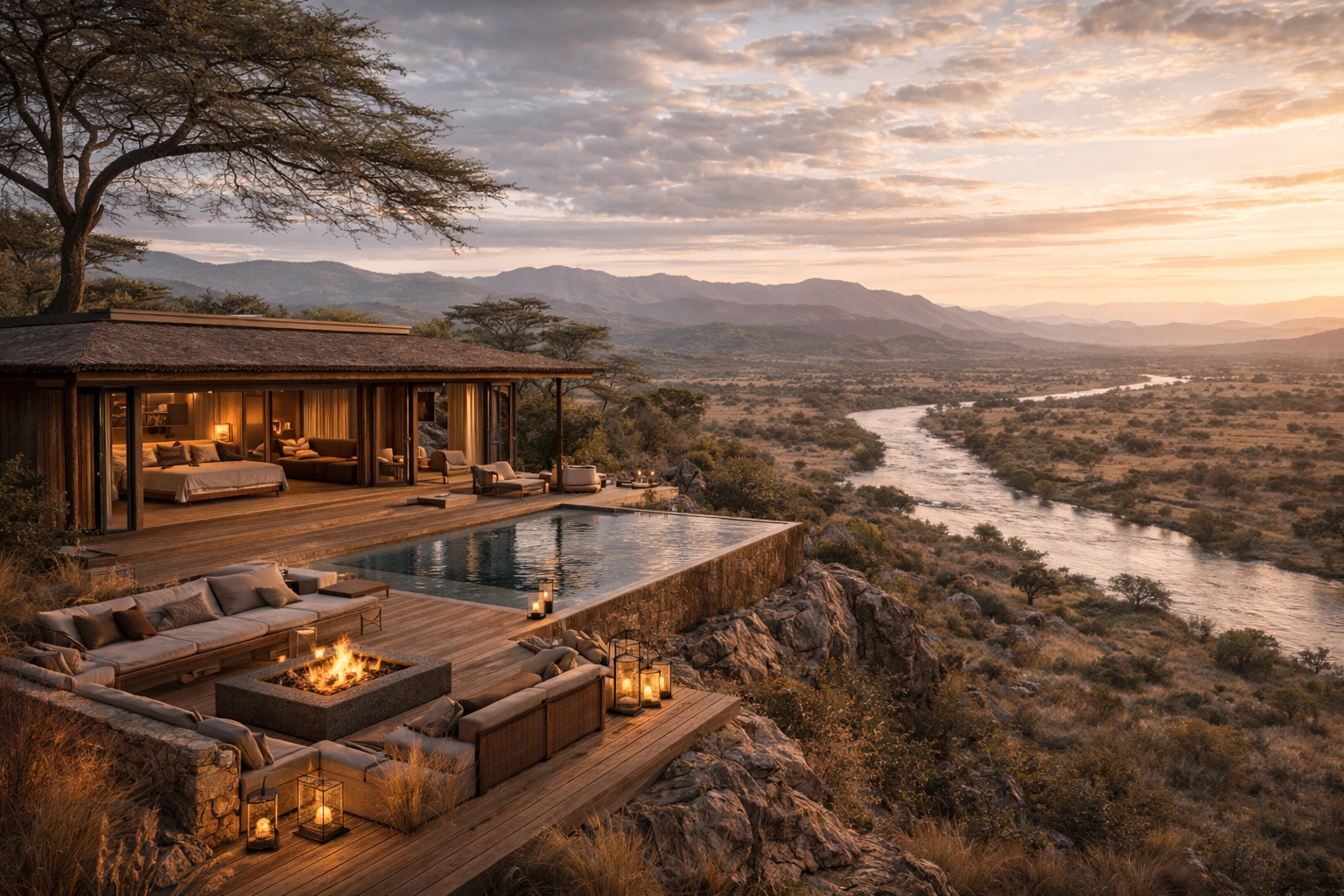
A strategic 2,000-hectare buffer acquisition completes the territory required for the Eisupat Conservation Trust.
Founder Martin Njenga confirmed that the expanded footprint eliminates the last possibility of adjacent development, securing complete acoustic isolation and zero light pollution for all thirty residences. "We are not building a destination," Njenga noted. "We are protecting a territory, and attaching a sanctuary to it."